Stitches of Love: Nurturing the Unique Needs of C-Section Kids
Learn the ins and outs of C-sections–what they are, when they happen, and how to fulfill the unique nutritional needs of your cesarean-born kid.

It’s always the happiest of times, welcoming your precious child into this world – regardless of the birth journey. But did you know that children born via C-Section have their own unique needs, especially when it comes to their immunity and gut health?
It’s true! That’s why your role as a parent really makes a difference in their early development! Don’t worry, we’re here to help you every step of the way.
In This Article
- C-Sections Are a Thing in the Philippines!
- C-Section and Your Child’s Health: What’s The Deal?
- No Worries! CS Kids Can Still Have Strong Start!
- Stronger Protection With a Strong Start
C-Sections Are a Thing in the Philippines!
You are not alone, Mommy! Cesarean Section deliveries are a lot more common than you might think! A surprising 4 out of 10 Filipino children are born via C-section.
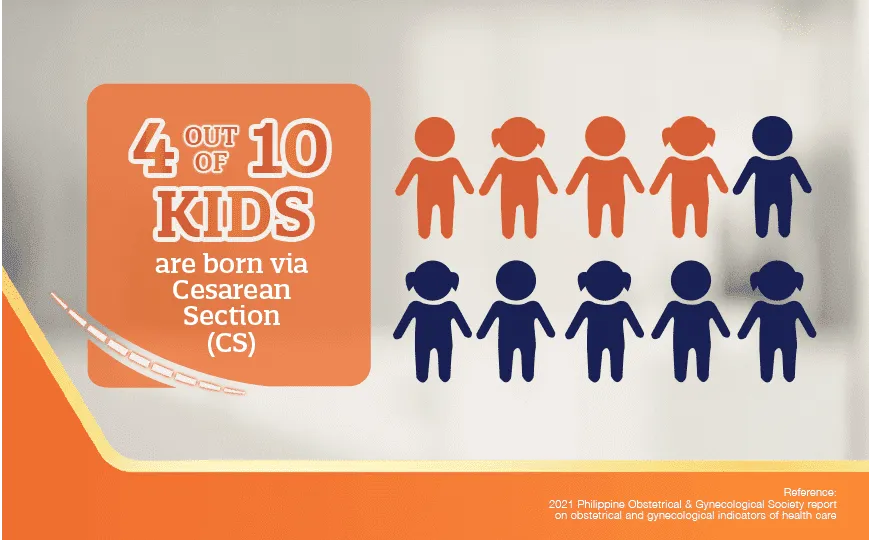
While C-Section is safe and medically indicated when vaginal delivery is not viable, there are studies that show that CS can disrupt your child’s early immunity and gut development.
Discover how to strengthen your child’s immunity and support healthy gut development.
C-Section and Your Child’s Health: What’s The Deal?
Imagine your kid’s gut microbiome as a lively community of friendly bacteria. The diversity of the good bacteria from their gut microbiome, plays a big role in their overall health. But this balance can be affected by the mode of delivery.
A Tale of Two Beginnings
- Vaginal Birth: During a vaginal birth method, the children are exposed to a rich and diverse array of good and bad bacteria from their mom’s birth canal. This kickstarts their gut microbiome development – setting the stage for early immunity and gut health.
- C-Section Birth: C-Section kids miss out on beneficial bacterial bacteria , resulting to C-Section Kids having less diverse gut microbiome that may sometimes lead to weaker immunity and gut health.
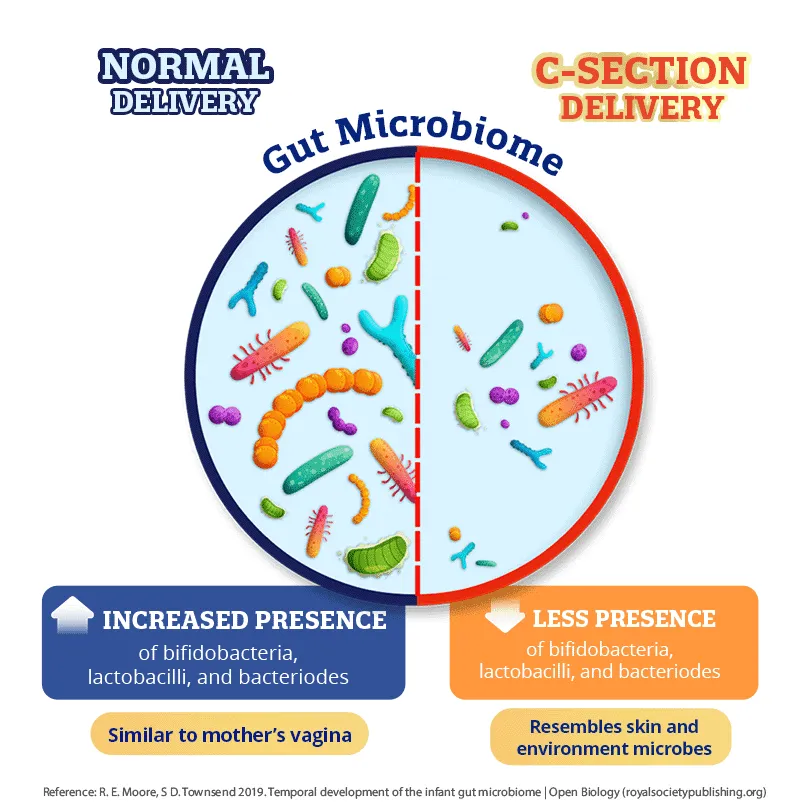
Meet the Good Guys in the Gut Microbiome
Even though C-section kids might miss out on some essential bacteria, their tummies are still home to a team of helpful microorganisms working hard to keep them healthy!
 | Bifidobacteria aka The Protectors: Act like tiny guards and keeps the harmful bacteria from taking over! |
 | Lactobacilli aka The Tummy Harmonizers: They keep your kid’s gut feeling good and balanced — easing digestion while supporting healthy immune development. |
 | Bacteroides aka The Energy Providers: Akin to tiny power plants — turning food into energy that fuels your kid’s growth and development. |
 | Akkermansia aka The Gut Boosters: Strengthens the gut lining, improves digestive health, and helps support a healthy weight. |
Why Gut Microbiome Diversity Matters?
When there's a good balance in gut microbiome, the helpful bacteria, like Bifidobacteria and Lactobacilli, keep the potentially harmful ones (like Clostridium difficile or Escherichia coli) in check.
So why is diversity so important? A healthy gut microbiome helps your child:
 | Digest food efficiently |
| Develop a strong immune system |
| Support their brain development |
CS-born children have different gut microbiota as compared to vaginally delivered and they may have a risk of gut microbiome imbalance or what we call dysbiosis.
Uh-oh! Tummy Troubles: Understanding Dysbiosis
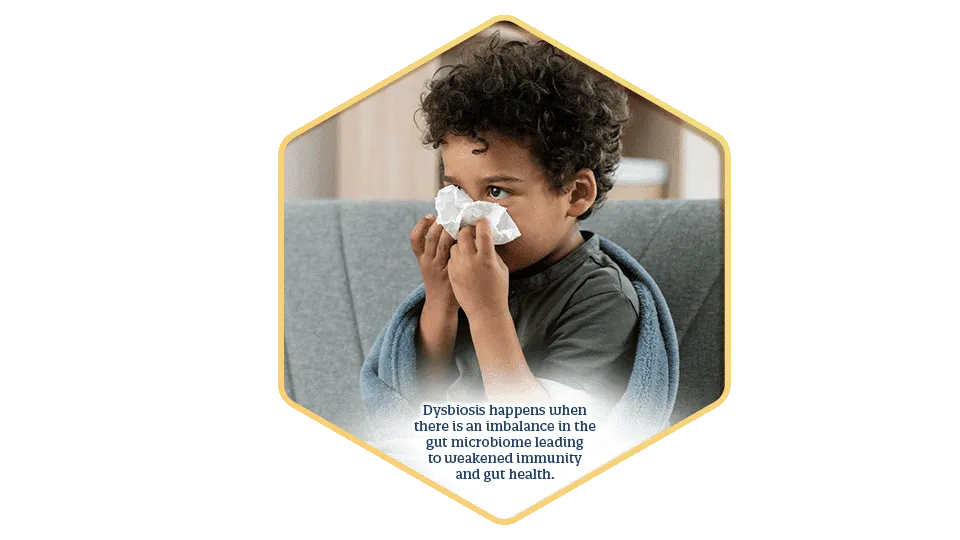
Dysbiosis happens when your child’s delicate gut ecosystem is interrupted. Since their tiny tummy plays a crucial role in various bodily functions — from digestion and nutrient absorption to immune system development — children with an imbalanced gut microbiome may experience common respiratory diseases such as asthma, Chronic Obstructive Pulmonary Disease (COPD), and respiratory infections.Find out ways to boost your child’s immunity and nurture gut health!
No Worries! CS Kids Can Still Have Strong Start!
We understand that learning about the impact of immunity and gut health to Cesarean kids might be a little overwhelming. But it’s okay! Take a deep breath. Your C-Section kid can absolutely thrive with the nutritional support specially designed for them.
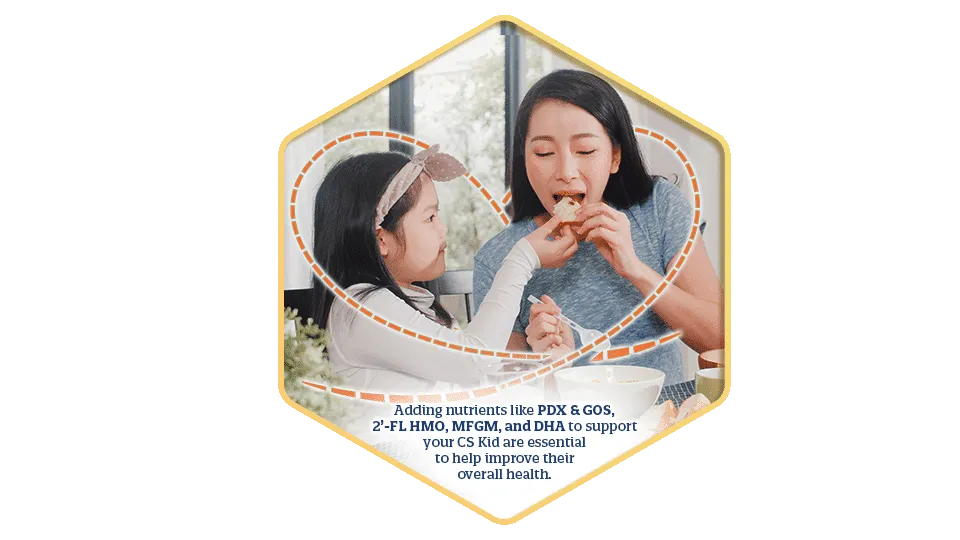
It’s all about improving the building blocks they need. Let’s explore the key nutrients that can really make a difference:
 | PDX and GOS aka The Dynamic Duo: These are prebiotics that foster the growth of Bifidobacteria, which are good bacteria that we want in our child’s gut. These promote softer stool and increase microbiome diversity in children, establishing a balanced and healthy gut flora. |
 | 2’FL HMO aka The Immunity Champion: This is the most prominent HMO (human milk oligosaccharide) found in human breast milk. It impacts your child's health by enhancing immune function and protecting against infections. |
 | MFGM aka The Brain-Boosting Powerhouse: This is found in breast milk. It has a positive association with Bifidobacterium, supporting your cesarean-born child’s cognitive and motor development. |
 | DHA aka The Essentials For The Eyes and Mind: This is a special kind of healthy fat that’s very important for your child's brain and eyes. Think of it as a building block that helps their brain develop well, all while supporting them. |
Discover the formula milk that support your child’s healthy gut development!
Stronger Protection With a Strong Start
We know that you want the very best for your C-Section child. That’s where we come in!
Introducing Enfagrow A+ CS-Biome: Specially formulated with the C-Biome blend to give them stronger protection and optimal brain, immunity, and gut development.
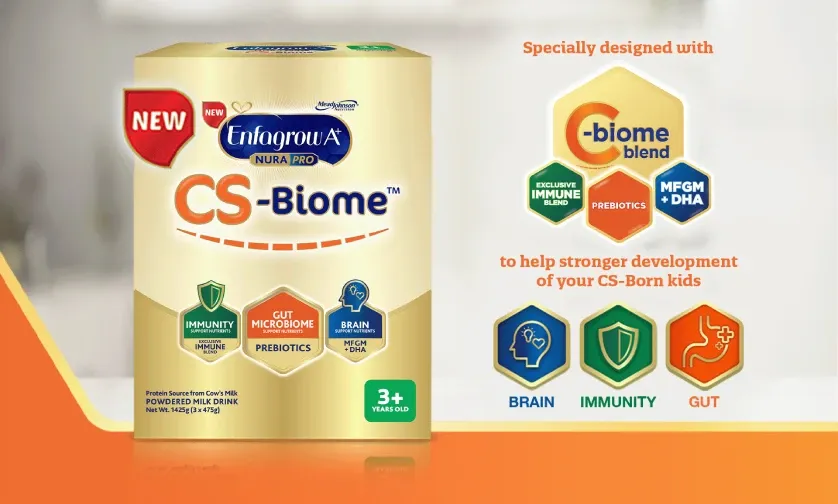
 | Brain Power: Made with a unique blend of MFGM and highest levels of DHA among staged milks to help nourish your child’s cognitive development. |
 | Immunity Armor: The Exclusive Immune Blend with 2x Higher 2’-FL HMO (vs Enfagrow A+ Four Nurapro) works along with MFGM to help strengthen your child’s natural body defenses and give them stronger immunity! |
 | Gut Balance: Specially formulated with prebiotics working along with MFGM to help enhance gut microbiome diversity and promote the growth of good bacteria for C-section kids! |
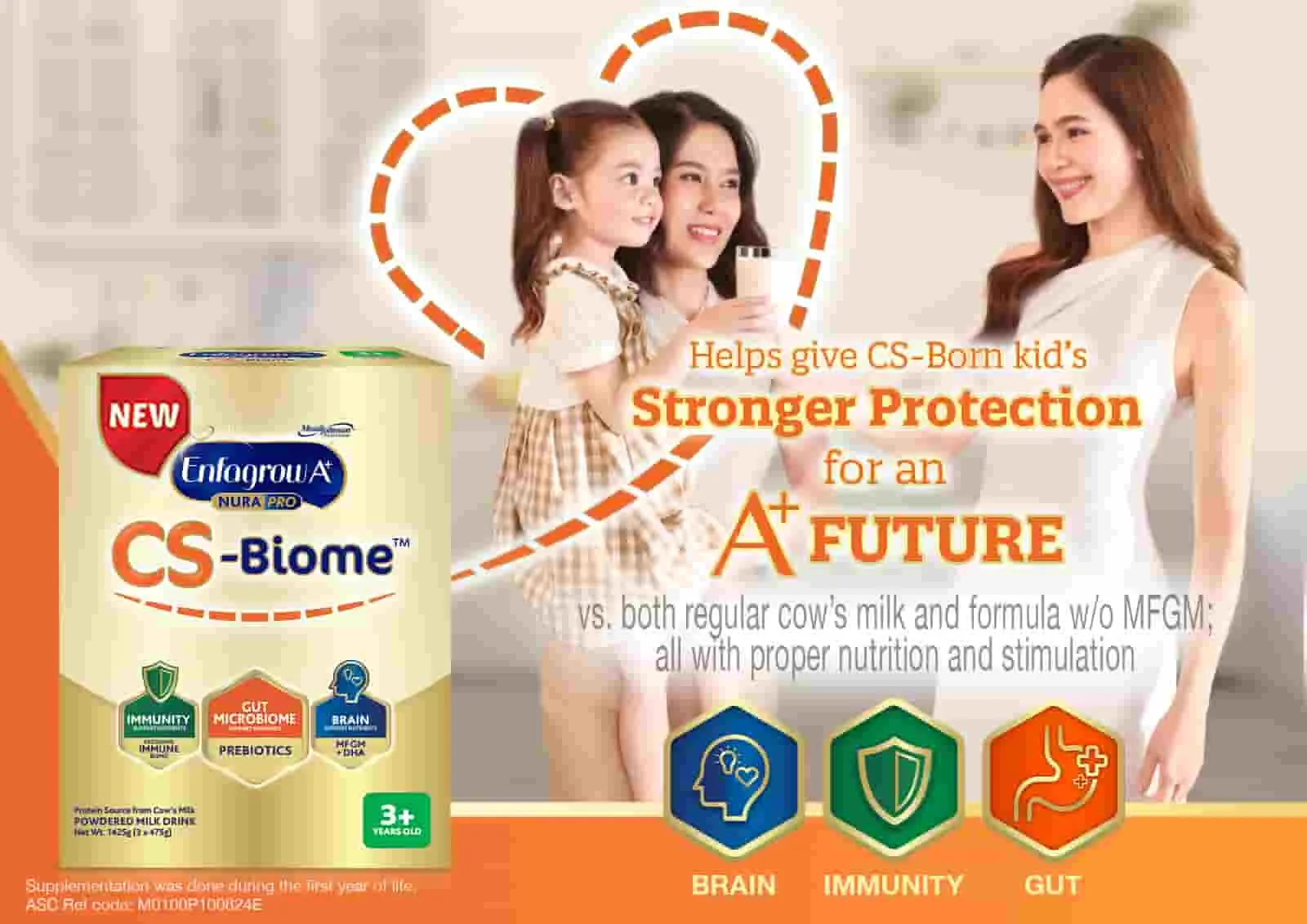
With Enfagrow A+ CS-Biome, you can give your C-section child stronger protection for an A+ future! Remember you’re not alone on this journey. We’re here to support you every step of the way – helping you reach your precious kids’ full potential.
References
- The Effects of Delivery Mode on the Gut Microbiota and Health: State of Art, available at https://www.ncbi.nlm.nih.gov/pmc/articles/PMC8733716/. Accessed 27 September 2024.
- Philippine Obstetrical and Gynecological Society (POGS). (2022). 2020 POGS report on obstetrical and gynecological statistics. Philippine Journal of Obstetrics and Gynecology, 46(1), 1-17.https://journals.lww.com/pjog/fulltext/2022/46010/2020_pogs_report_on_o… Accessed 27 September
- Arora, K. (2023, January 11). Birth by Caesarean can alter the path of immune system development. BioTechniques. https://www.biotechniques.com/immunology/birth-by-caesarean-can-alter-t…. Accessed 27 September 2024.
- Cleveland Clinic. (2021, November 12). Vaginal Seeding. https://my.clevelandclinic.org/health/treatments/22096-vaginal-seeding. Accessed 27 September 2024.
- Tamburini, S., Shen, N., Wu, H. C., & Clemente, J. C. (2020). The microbiome in early life: Implications for health outcomes. Nature Medicine, 26(1), 71-82. https://pubmed.ncbi.nlm.nih.gov/33405258/ Accessed 27 September 2024.
- D'Argenio, V., & Salvatore, F. (2020). The role of the gut microbiome in the healthy adult status. FEMS microbiology reviews, 44(6), 763–802. https://academic.oup.com/femsre/article/44/6/763/5895330?login=false Accessed 27 September 2024
- Heczko, P. B., Giemza, M., Ponikiewska, W., & Strus, M. (2024). Importance of Lactobacilli for Human Health. Microorganisms, 12(12), 2382. https://doi.org/10.3390/microorganisms12122382
- Rodriguez, J. M., Murphy, K., Stanton, C., Ross, R. P., Kober, O. I., Juge, N., Avershina, E., Rudi, K., Narbad, A., Jenmalm, M. C., Marchesi, J. R., & Collado, M. C. (2012). The composition of the gut microbiota throughout life, with an emphasis on early life. Microbial Ecology in Health and Disease, 23(1), 10.3402/mehd.v23i0.17986 https://pubmed.ncbi.nlm.nih.gov/21946836/ Accessed 27 September 2024
- Chu, D. K., Ma, J., Prince, A. L., Antony, K. M., Seferovic, M. D., & Aagaard, K. M. (2019). Maturation of the infant microbiome community structure and function across multiple body sites and in relation to mode of delivery. Nature Medicine, 25(3), 548–556. https://www.ncbi.nlm.nih.gov/pmc/articles/PMC6629589/ Accessed 27 September 2024
- Bazanella, M., Maier, T. V., Clavel, T., & Sigrist, S. J. (2021). The Role of the Gut Microbiome in Obesity: A Review. Cell Metabolism, 33(3), 544–561. https://www.ncbi.nlm.nih.gov/pmc/articles/PMC7996302/ Accessed 27 September 2024
- WebMD. (n.d.). Docosahexaenoic acid (DHA). Retrieved from https://www.webmd.com/vitamins/ai/ingredientmono-864/docosahexaenoic-ac… Accessed 27 September 2024